
The United States has in recent times become highly polarized politically between the left and the right.
One group believes the world has been set up — in its laws, institutions, and norms — to protect and advance the interests of a privileged few at the cost of the underprivileged masses and minorities. It wishes to find ways to appropriate the gains and excesses perceived to have been made by the “haves” and redistribute them more fairly across the “have-nots”. The other group believes that, in fact, the “haves” have gotten there because they have worked hard, performed meritoriously, and invested in their families, and that these values of hard work, meritocracy, and flourishing families are the bedrocks of American life.
The beauty of RT’s story is that it upends this dichotomy, not by rejecting both premises and coming up with a third view, but by embracing the best of the left and the right.
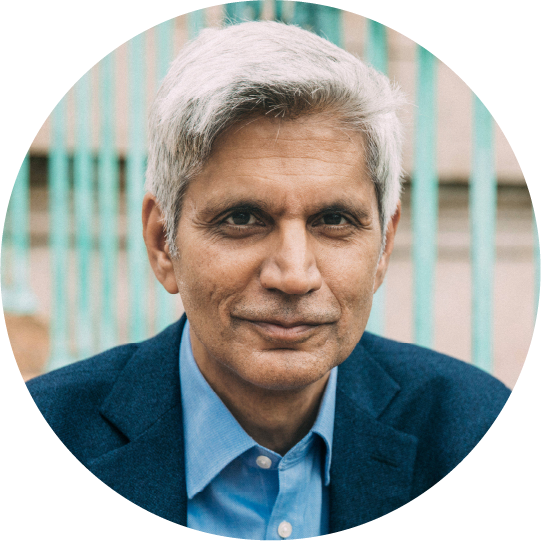
RT grew up in a privileged family, studied mathematics, and then went into a career in finance, working for an insurance company for his first two decades of work life.
During this time, he started to get solicited by people with less means who were seeking a loan — to buy a farm tractor, or a truck. These people hadn’t been able to get banks to give them a loan except at punitive rates, because banks saw them as high credit risks and without steady incomes. RT would give them loans from his family inheritance. In his view, these people could be trusted to use the funds responsibly and to stay committed to paying them all back.
Eventually, he quit his insurance job to build a whole business out of giving loans to people without strong credit histories or steady income levels, charging them interest that was half of what the banks were doing, 18% instead of 35%.
One innovation he brought was to not require credit scores from many of his customers who weren’t or could not be a part of the formal financial system — but to instead rely on existing customers for references.
Today, this business employs 108,000 people, serves 23 million customers, and has a market capitalization of $10 billion. More than 98% of its dues are paid by the debtors on time.
You might say, “Sounds like a classic capitalist success story, Hitendra. He found a market opportunity, he went after it, he worked hard and he worked smart, and he’s a billionaire!” If that’s how you feel, you’d get the applause of the political right, and you will certainly be right to think of it this way.
Your suspicion that he’s essentially a capitalist would be reinforced when I tell you that he significantly underpays his employees, which of course fattens his business’s profits.
So then why did RT recently tell Bloomberg, “I am a bit of a leftist”?
“I was never enthusiastic about making life pleasanter for people who already have a good life”, he relates. “Rather, I wanted to take away some unpleasantness in the lives of people who are getting into problems.”
RT — this “bit of a leftist” — leaned into capitalism and used it to make life a bit better for those the system wasn’t serving. He wasn’t doing it as a charity — he was relying on the hard work and meritorious capacities of the less privileged that would ensure that they would use the loans he was providing them for the right purpose, giving themselves a jump-start in life to create their own, well-earned income streams.
Now you might say, “That’s not much of a leftist. After all, lots of businesses make money by providing goods and services to poor people.”
So let me tell you more.
He pays most employees 30% less than their peers; he underpays his senior people even more — they earn 50% less than their peers. His employees say they get a better work environment, and greater flexibility. “I value the peace of mind, stability, and comfort that this job offers”, a branch manager at RT’s firm recently said. “The group’s culture is more humane. There is no intense pressure to deliver.”
But here’s how RT describes why he pays them less: “We would give them as much as they need to keep themselves reasonably happy, not euphoric. They shouldn’t be encouraged to compare themselves with all people around them. They would only have misery.”
How fair is it to significantly underpay employees in order to keep their materialism in check while owning a $10 billion business they’ve helped build?
Except, he doesn’t.
Eighteen years ago, RT gave up all his personal stake in the company and put it into a trust whose beneficiaries are a group of 44 employees. RT himself lives in a small home, for years has driven a small Hyundai car, and doesn’t own a smartphone because he considers it a distraction. He confesses to occasionally splurging — by taking his family to a tiger sanctuary.
He has no formal role left in the company, though every fortnight, senior managers brief him and get his advice. “I have the personality of a consultant,” RT says. “I can see things slightly differently. I’m OK with people not accepting my perception and doing things based on their perception. And if it turns out that I was right and they were wrong, which happens most of the time, I am able to communicate with them later on and say I told you so.”
He is now 86. Does a man who is right “most of the time” have any regrets? Yes, one. Not that he gave his wealth away, but how he did it. For he didn’t realize how profitable his business would become. If he’d known that, he would have spread his stock across a larger pool of employees. “I did not imagine that so much money was going to be distributed to so few,” he says. “I’m not very happy about it. But it’s OK. I’m not very sad either.”
RT’s story shows us that left-wing thinking is one facet, right-wing is another, and it is only when all facets come together that we will have assembled the whole diamond of truth.
There’s one more moral to the RT story. You see, RT is not an American entrepreneur. R. Thyagarajan and his $10 billion company Shriram are from India, and were recently profiled by Bloomberg.
There’s no reason to believe that all the lessons we can learn to advance our economic models will come exclusively from Silicon Valley or Wall Street or Ivy Leagues or the world’s eminent economic think tanks. There are powerful stories playing out all around us, in every economy, of people ascending from the ordinary to the extraordinary, inviting us to reshape our thinking on what’s possible.
Warmly,
Hitendra
Like This Newsletter?
Share it with someone who might find it valuable.


Leave a Reply