
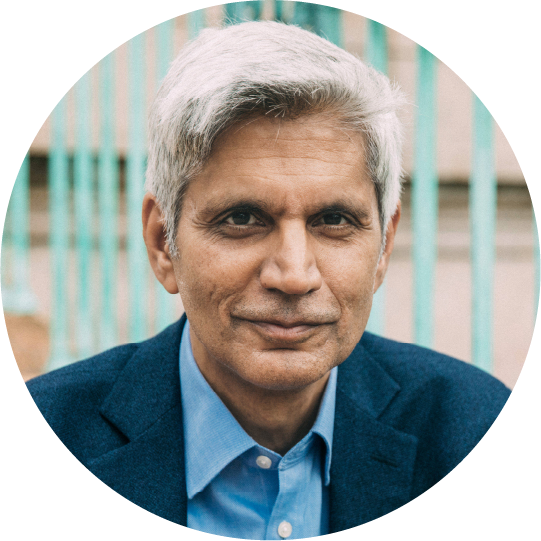
Twenty-six years ago, I was in Silicon Valley doing my first startup, Paramark, in the thick of the Web 1.0 revolution. One day I received a phone call from my lead angel investor, Kanwal Rekhi. Kanwal was well known in the Valley as a successful technology executive, an investor, and a mentor to the next generation of Indian-American entrepreneurs.
“Hitendra,” he said, “Fortune magazine is doing a story on the influence of Indian entrepreneurs here in Silicon Valley, and it will be highlighting me. I’ll be talking with them about you and Paramark, along with a few of my other mentees and their companies.”
My heart skipped a beat.
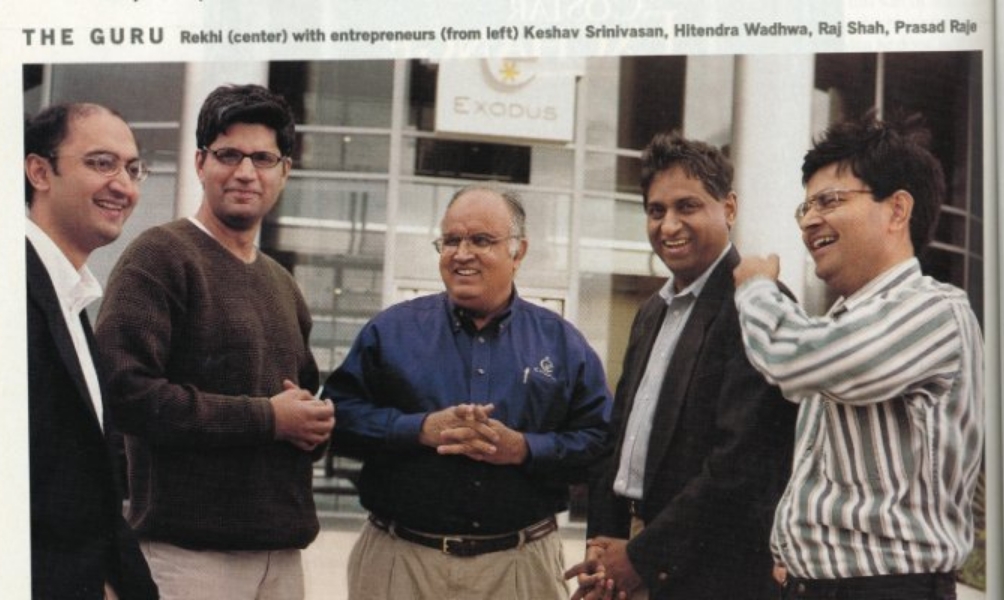
“They want to do a photo shoot. I’ve invited four entrepreneurs to join me, and I want you to be one of them. We’ll do it outside the gurdwara close to my home.”
In a calm voice, I responded, “Of course, Kanwal-ji. This is a great opportunity. Thank you for thinking of me. I will be there.”
We put down the phone, and I threw my fist in the air. My fledgling startup, barely launched, was going to have a major media moment.
On the day of the shoot, the photographer asked Kanwal and his band of four to stand together and speak animatedly, as though we were incubating the next great technology revolution. For at least one of us, the only thought in his head was, “Yay. We’re going to be in Fortune magazine!”
About a month later, Fortune appeared on newsstands with a cover story titled “The Indians of Silicon Valley.” Kanwal was on the cover; inside was the photograph of him with the four of us, and some brief commentary on our startups.
I went out and bought eight copies of that issue, thinking I would want to give them away. Instead, I stored them the way one stores a treasure. I think I wanted to have them so I could revel in that public accolade, again and again, in the years to come.
So those eight copies of Fortune traveled with my family when we packed our bags two years later, after Paramark had been sold in a humble sort of way to our lead investor, and moved to New York.
For many years these eight copies lay in a box in the basement of our New York apartment building. Then one day I was shattered to discover that someone had opened our storage unit and thrown out everything inside, mistaking it for boxes abandoned by a resident who had moved out. We lost a few things. Most were replaceable—except the eight copies of Fortune.
I went to Fortune magazine’s website, hoping they had republished the article online. But the article had come out in 2000, when the internet was still being born, and there was no digital copy.
Oh, what a senseless act to throw my box away! What an injustice! I was beside myself. A treasured moment had vanished without a trace.
My dismay lasted for weeks. Then one day, my inner voice spoke up.
“Hitendra, let us have a conversation. You’ve been upset for too long, about this magazine you’ve lost. What has made you feel so distressed? What is this hunger that you are trying to feed?”
That made me take pause.
“You wish to be famous? To be admired? To have the world see that you are highly successful?
“What is it?
I started to feel a bit sheepish. It was the first honest look I had taken at the feelings that had been percolating in me since the day of Kanwal’s call. There had been nothing wrong with appreciating how the Fortune coverage raised Paramark’s profile. But somewhere along the way, I had turned a brand-building moment into a symbol of my worth, measured in the currency of fame. Instead of my owning some copies of Fortune magazine, Fortune magazine had come to own a part of me.
I felt wiser, and at peace. The universe had arranged to have that box disappear to teach me this lesson.
Life moved on.
Two years later, there was a knock on our apartment door. A man stood there holding a box.
“I think this belongs to you. It has your name on it. We found it while clearing out a unit in the basement.”
My wife recognized it at once, and smiled. “Why, it’s the box with your Fortune magazines!”
I looked at her and smiled back.
“Then let us not take it in,” I said. “I will place it in the recycling bin tomorrow. I feel no need to keep it around anymore.”
How sweet, I thought, for the universe to play this little game with me, to return the box after I’d learned my lesson and lost my attachment.
Two decades passed. We entered 2026.
On a crisp September afternoon this year, I was in conversation with a dear mentor and friend, Betty Sue Flowers, here in Manhattan. I was telling her how life has so often taught me its most valuable lessons not by giving me things but by taking them away, and how sometimes it takes me a while to learn, but eventually I do. To illustrate, I told her the story of my dear mentor Kanwal, the Fortune article, the eight copies, the loss, the inner reckoning, and the box that came back two years later, which I then wisely let go without even opening.
Betty Sue furrowed her brow and said, directly, “Hitendra, you shouldn’t have abandoned that box. You should have kept one issue of that magazine with you.”
I looked at her, puzzled. “Why would I do that, Betty Sue?”
“As a symbol. A physical reminder of this beautiful lesson in humility and non-attachment that you learned.”
“Oh…that’s such a different way of looking at it.”
By placing the box in the recycling bin, I may have just traded the pride of possession for the pride of renunciation. Betty Sue was telling me that it is not whether you possess a thing that matters. It is how you relate to what you possess.
Well, the box was long gone. There was no copy for me to keep now.
Precisely one week later, I stepped into a local cafe to meet a former Columbia student, Vikram, who wanted to talk about his life goals. He arrived carrying something flat and rectangular, wrapped in gift paper.
“Professor, I’m grateful you’re taking the time for me, and I brought you something. It’s from a moment in your life many years ago. I hope it makes you smile.”
“What moment is that?” I asked, curiously turning the package over.
“I read that you did a startup, Paramark, and that Kanwal Rekhi mentored you. And that you were once featured with him in Fortune.”
I laughed. “That’s true. But how do you know? There’s almost nothing about that article online.”
“Kanwal posted about it on LinkedIn last year, celebrating its twenty-fifth anniversary. I follow him, and found it on his feed. He included a photo. Go ahead, open your gift if you’d like to.”
I unwrapped the paper.
There it was. The photograph from Fortune. Kanwal Rekhi and his four protégés, gathered outside a Silicon Valley gurdwara, looking every bit the part of thoughtful entrepreneurs about to transform the world. Beautifully framed.
“Vikram, thank you. How utterly thoughtful of you. You didn’t have to do this.” I held his hand. I could not stop smiling.
“And you have no idea how divinely timed this gift is.”
Then I told him the whole story. The eight copies. The pride with which I had stored them. The despair of losing them. The inner voice. The box that came back. The decision to let it go. Betty Sue.
We sat back and marveled at the sweet synchronicity of it all.
I had thought this story was over the day I left that box for recycling. It was not. There was one more lesson waiting for me.
A photograph that first came into my life through the generosity of a mentor had now come back through the generosity of someone I was mentoring. The first time, it made my feathers fluff with pride. This time, it was coming to stay as something else: a reminder to notice what a possession stirs in me, and to let the vanity pass.
Most of us keep something as evidence that we are, or have been, somebody. A clipping. A title. A photograph. Betty Sue would not tell us to throw it away. She would invite us to pay heed to the feelings and thoughts that get stirred when we look at it. Held one way, it may feed our vanity, our sense that we are more worthy because we did this or won that. Held another way, it brings us grace—gratitude for what we were given, a fond memory of one of life’s fleeting moments, and lessons it helped us learn.
In your own life, what are the things from your past you hold on to? And what makes you hold on to them?
With gratitude,
Hitendra
Note: There is a sweet aside to this story. My friend Betty Sue Flowers played a role in this story that she was especially suited for.
Among the many accomplishments in her luminous life, she (quoting Wikipedia), “served as series consultant for the PBS documentary Joseph Campbell and the Power of Myth, a six-part series of conversations between journalist Bill Moyers and mythologist Joseph Campbell, recorded primarily at George Lucas’s Skywalker Ranch in 1985 and 1986 and broadcast in 1988. She also edited the companion book Joseph Campbell and the Power of Myth, published by Doubleday in 1988, which became a New York Times bestseller.”
This PBS series introduced a generation to the hero’s journey: the call, the departure, the trials, and finally the return, when the hero comes home bearing a gift for others. Campbell taught that the journey is not complete until that return is made, and that the return is the stage most often left unfinished. Betty Sue’s work helped make sure those conversations lived on the page. So perhaps it is fitting that when I told her my little story, she heard what I had not: that it was unfinished. I had answered the call, I had been tested, I had learned to let go. But I had come home empty-handed, and a little too pleased about it. She sent me back for the one copy I should have kept. And by offering my story in this newsletter to you, I have now finally returned.
Like This Newsletter?
Share it with someone who might find it valuable.


Leave a Reply