
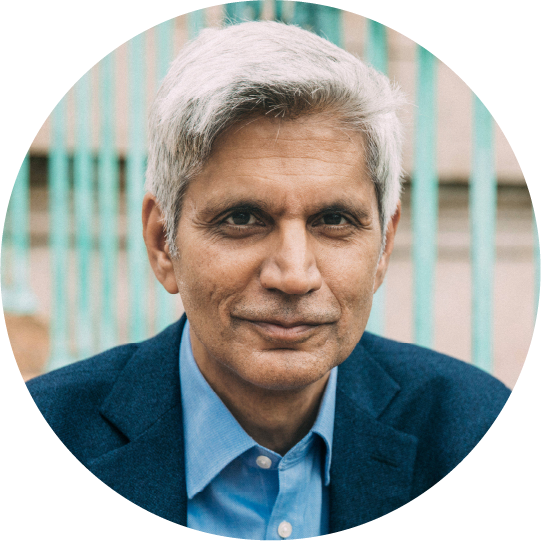
When his favorite professor was denied tenure because of political reasons, Robert, an aspiring philosopher on his way to becoming a college professor, turned to medicine instead.
Medicine, he reasoned, would be a field where politics could not play a hand. The stakes were simply too high.
He set his sights on becoming a heart surgeon, but was disappointed to find that people who were getting the most referrals were not necessarily the best surgeons — they were the ones who had the right social connections.
In the middle of his residency, Robert’s program director sent him to Mexico, where he got the opportunity to operate on children with cleft lips and palates in a very remote part of the country. Here, Robert found his speciality, feeling passionate about helping people destined for a bad life and giving them another chance. Upon finishing his residency at Stanford University, he became a plastic surgeon at Kaiser Permanente.
Then in 1999 — around 20,000 surgeries later — Dr. Robert Pearl’s career and purpose took a new turn once again.
Kaiser Permanente found itself on the verge of bankruptcy with two days of cash left to operate. In California you were required to have at least three days worth of cash just to stay in business. The then-CEO left under pressure, and the position became open. A surgeon at that point, Pearl was given a choice — to continue to do something he loved, or take what he thought of as a responsibility.
“I loved my craft. The hardest thing for me becoming CEO was giving up that clinical practice. I didn’t want to do it. I just knew that I had to.”
Pearl led Kaiser Permanente for 18 years, during which he saw how broken the U.S. healthcare system was and the effort it would take to improve it, leading him to take action. At some point, the problem became personal — his father died from long-term complications from an easily preventable medical mistake. He began to grasp the full picture, the financial, emotional, and social toll that easily preventable mistakes were taking, and committed himself to making Kaiser Permanente the safest medical group in the United States. By 2017, when he left his position as CEO, Kaiser Permanente had become a highly recognized organization in the country.
But this was far from the end of his journey. The next phase of his purpose was just unfolding.
“I set my sights on improving the health of the nation, hoping to find a way to achieve the same quality, technology and affordability our medical group delivered to 5 million patients on both coasts,” he wrote in this Forbes article.
Pearl has continued to expand his reach through his two books, his podcasts, and numerous keynote speeches. He serves as a clinical professor of plastic surgery at Stanford University School of Medicine and is on the faculty of the Stanford Graduate School of Business. He has also been featured on CBS This Morning, CNBC, NPR, and in TIME, USA Today, and Bloomberg News.
Named one of Modern Healthcare’s 50 most influential physician leaders, Pearl is an advocate for the power of integrated, prepaid, technologically advanced, and physician-led healthcare delivery.
“As I tell people, I’m sort of on my 3rd career, I had the opportunity to be a surgeon, fixed kids with cleft lip and cleft palate to cure about 10,000 patients and families, we did it really well at great depth, but 10,000 is a relatively small number. I became CEO in Kaiser Permanente and had the chance to take care of 10 million people, a far fewer or far lower percentage of them as a consequence but the impact is obviously broader, both on the East Coast and West Coast. I think of myself now in this 3rd career, which is trying to move American medicine to affect the health of 300 million people.”
Robert’s story reveals an important truth about our pursuit of purpose — for many of us, it won’t come in a single moment of divine intervention. It will unfold in stages. We have to stay watchful and open, not simply toward the outer developments around us, but to the inner stirrings within us. It is along that path where our inner and outer worlds come together and harmonize that our purpose is to be found.
Warmly,
Hitendra
P.S. As you reflect on your own purpose and how it aligns with your profession, are there people you should share this email with — individuals who might benefit from Dr. Pearl’s story as they move along their own path to purpose?
Like This Newsletter?
Share it with someone who might find it valuable.


Leave a Reply