
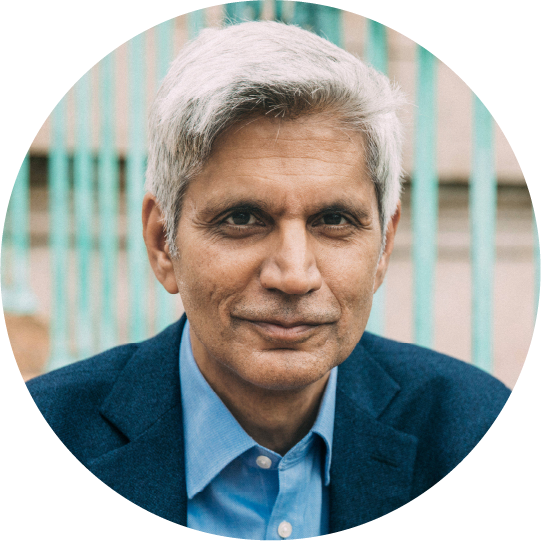
The story that opens this newsletter belongs to Kook, a 2026 Mentora Scholar, and is told in his own voice. I wrote this newsletter with Hannah Williams, a senior at McGill University and part of our first Mentora Scholars cohort in 2025. It has been a joy to collaborate with her. — Hitendra
A shove from behind sent me stumbling off the curb. I nearly fell.
When I turned around, a finger was pointing inches from my face. The man behind it was hurling abuse at me.
It was my first time taking a bus outside China. I had just arrived in Montreal, where even the language on the street was not English, my second language, but French. Moments earlier, I had been studying my phone, trying to understand where to stand and how to board.
Now I stood frozen, clutching my bag.
Then my body took over. I hurried away and stopped only when I saw that he was not following me. Across the intersection, the man began shouting at several other unhoused people, carrying the same rage from one person to the next.
That evening, I returned home, sat on my meditation mat, and entered my loving-kindness practice.
May you be happy.
May you be safe.
May you be well.
May you be at ease.
It was only later, during my daily reflection, that I realized with some surprise what I had done: I had offered loving-kindness to the man who had pushed me.
Where did that instinct come from?
Perhaps it relates to what happened thousands of miles away, shortly before I left China, in my father’s darkened bedroom.
My father and I had barely spoken directly for ten years.
As a child, when I brought home a poor grade, I sometimes had to kneel on the needle-sharp leaves of a sago palm and wait for his belt. Silence became the distance between us.
But before going abroad, I decided that we needed to talk.
One evening, as he walked back to his bedroom, I stopped him.
“We need to talk.”
He looked startled.
“Talk about what? There’s nothing to talk about. Go back to your room and do your work.”
He entered his room. I followed.
“We need to talk,” I repeated, although I did not know how to begin.
Again, he told me to leave. Then he switched off the light, lay down, and pulled the blanket over his head.
I remained standing beside the bed in the darkness.
For nearly two hours, he repeated the same words. “There’s nothing to say. Go back to your work.”
Still, I stayed.
Then the sound of crying rose from beneath the blanket.
My father began telling me about the rejection he had experienced as a child, the humiliations he had carried, and the many ways he felt unseen by his family, my mother, my brother, and me.
Nothing he said erased what he had done. He did not suddenly become a different person.
But beneath the blanket, I encountered someone I had never fully seen: not only the father who had caused pain, but also a frightened and wounded man who had never learned what to do with his own.
That night, ten years of silence began to dissolve. Soon afterward, I left China and arrived in Montreal.
So when the man pushed me, perhaps some part of me already understood: we sometimes pass outward what we cannot hold or heal within.
This does not mean we should tolerate harm. I moved away. Compassion begins with protecting life, including our own.
But once we are safe, we face another choice. Will we return suffering with a wish for more suffering, or will we interrupt its journey?
— Kook, 2026 Mentora Scholar
This question has stayed with me. Kook’s prayer comes from the Buddhist practice of loving-kindness, and the Sermon on the Mount asks the same thing: “Love your enemies and pray for those who persecute you.” Traditions that differ on so much else meet here. Why would they ask something so hard of us?
Perhaps because they saw how pain travels. Anger produces anger. Humiliation produces humiliation. Fear produces fear. Left unexamined, pain can travel remarkably far, sometimes from one generation into the next, as it had in Kook’s own home.
We tend to think of leadership as something exercised outwardly: influencing others, making decisions, creating change. But some of our most consequential acts of leadership happen before we act upon the world at all. They happen in our inner laboratory, in the space between what happens to us and what we choose to send back.
What if one person chooses not to pass it on? What if, without denying injustice or surrendering accountability, we become curious enough to ask what pain may lie beneath another person’s actions? And what might that choice make possible within us?
I met Kook when he joined our 2026 Mentora Scholars cohort in Nashville. He arrived already carrying a rich inner life. What Mentora gave him, he says, was language for it, and a place to put it into practice.
He practiced there, too. He volunteered to lead a mindful writing workshop for his fellow Scholars,and has since adapted it for new audiences and languages.
What stayed with Kook most was that Mentora’s faculty weren’t only teaching this work; they were, in his words, “people trying to live the philosophy they were teaching and inviting us into that practice alongside them.”
That, to me, is the heart of what we hope to offer. Our Inner Mastery, Outer Impact model of leadership is not about becoming untouched by difficulty. It is about developing the awareness and inner freedom to choose who we will be when opportunities or challenges come knocking on our door.
For Kook, one expression of that inner practice is loving-kindness. Today he offers the same meditation to those he loves and to those who trouble him.
“I do not pray for them because what they did was right,” Kook writes. “I pray that they may become so well that they no longer need to pass their suffering on.”
Perhaps this is one of the quietest forms of leadership available to us: to recognize suffering without becoming its next carrier. To protect ourselves without hardening ourselves. And to cultivate ourselves so deeply that what passes through us can be transformed before it reaches someone else.
Is there someone who has troubled you this week? You might hold them in mind for a moment, and try the words yourself.
May you be happy.
May you be safe.
May you be well.
May you be at ease.
With gratitude,
Hitendra & Hannah
Mentora Scholars 2027
Mentora Scholars is a fully-funded summer program for college students, focused on developing the next generation of transformative leaders. We take our Scholars on a journey that begins within and extends into how they lead, serve, and create change in the world.
Kook, 2026 Scholar: “Living together during the Mentora Scholars program created trust, psychological safety, and countless informal learning moments. Some of my most meaningful conversations happened over meals and walks.”
Hannah, 2025 Scholar: “My Mentora Scholars experience in Nashville was truly transformative; it continues to shape how I think, reflect, and act daily. Just yesterday, I filled nearly five journal pages unpacking experiences from Mentora Scholars, and I was struck by how much depth and inspiration I am still discovering.”
Applications are now open for our 2027 cohort. Early application deadline: November 8, 2026.
Information sessions:
- October 20, 2026, 4:00 pm ET, via Zoom
- October 21, 2026, 12:00 pm ET, at NYU
- October 27, 2026, 12:00 pm ET, at Penn
- October 29, 2026, 12:00 pm ET, at Barnard
- October 29, 2026, 3:00 pm ET, at Columbia
Like This Newsletter?
Share it with someone who might find it valuable.


Leave a Reply