|
|
|
|
If you find this newsletter inspiring or of value, share it with a friend or colleague.
|
|
|
|
|
|
|
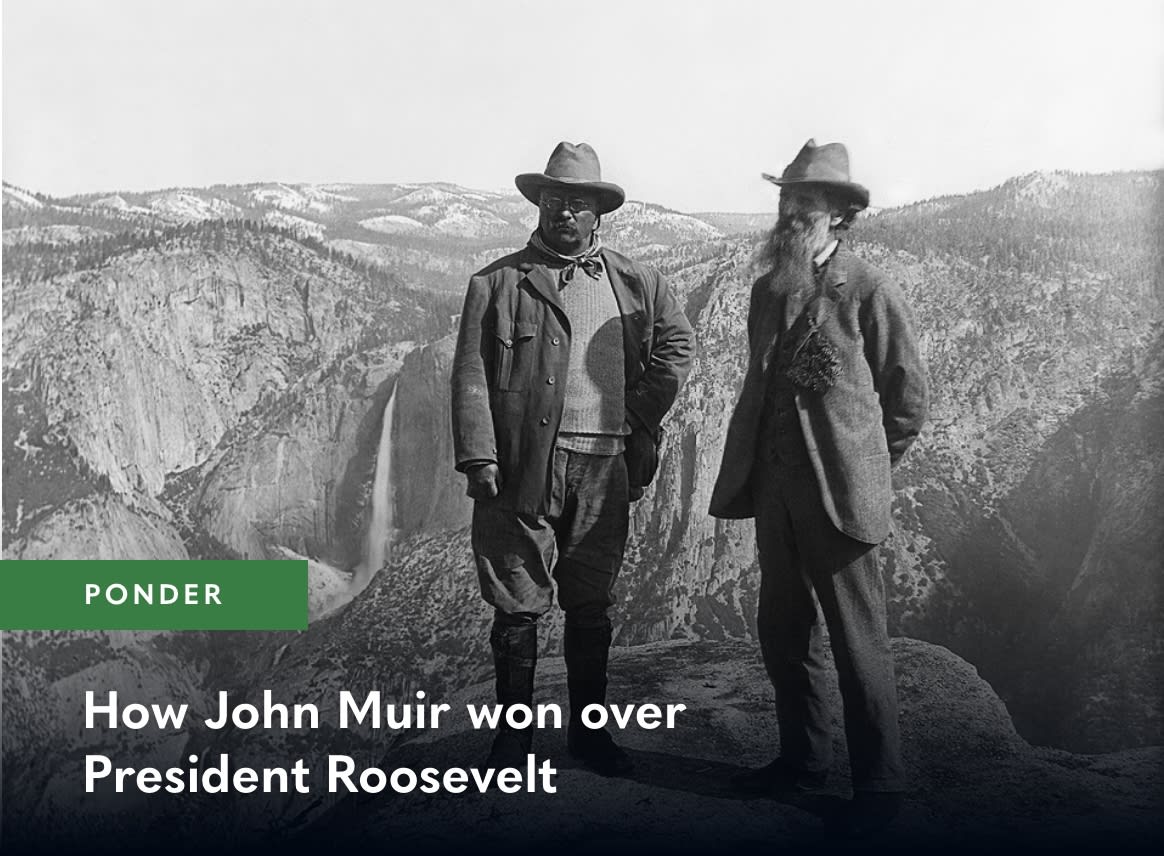
Snow fell silently over Yosemite’s Sentinel Dome. The fire hissed and cracked in the night air. One of the most powerful men in the world pulled his coat tighter and gazed upward, wide-eyed. U.S. President Theodore Roosevelt, far from the marble corridors of Washington, was lying on a bed of pine needles, five inches of fresh snow rising around him.
|
Beside him, John Muir—the wild-bearded mystic of the mountains—smiled gently. This was no ordinary night. This was a night of awakening.
|
|
|
The Changemaker’s Gentle Power
|
Long before this moment, Muir had intuited something vital: Roosevelt, for all his bravado and bureaucracy, held a quiet reverence for the wild. He had been a rancher, a hunter, a lover of frontiers. His soul already leaned toward nature.
|
Muir dearly wished for Yosemite to become a federal preserve, to keep it protected for future generations. So, he reached out to Roosevelt, sharing with the President how, years earlier, he had invited Ralph Waldo Emerson to camp with him in Yosemite.
|
“I regret,” Muir wrote, “that when Emerson came to see the Yosemite, his friends would not allow him to accept my invitation to spend two or three days camping with me, so as to see the giant grandeur of the place under surroundings more congenial than those of a hotel piazza or a seat on a coach.”
|
Roosevelt replied that if he ever came west, he would seek out Muir for exactly that experience. Precisely what Muir must have hoped for.
|
Lesson #1: The most powerful ask is not an ask at all.
Speak from the soul, and let the soul in others awaken.
|
|
|
|
|
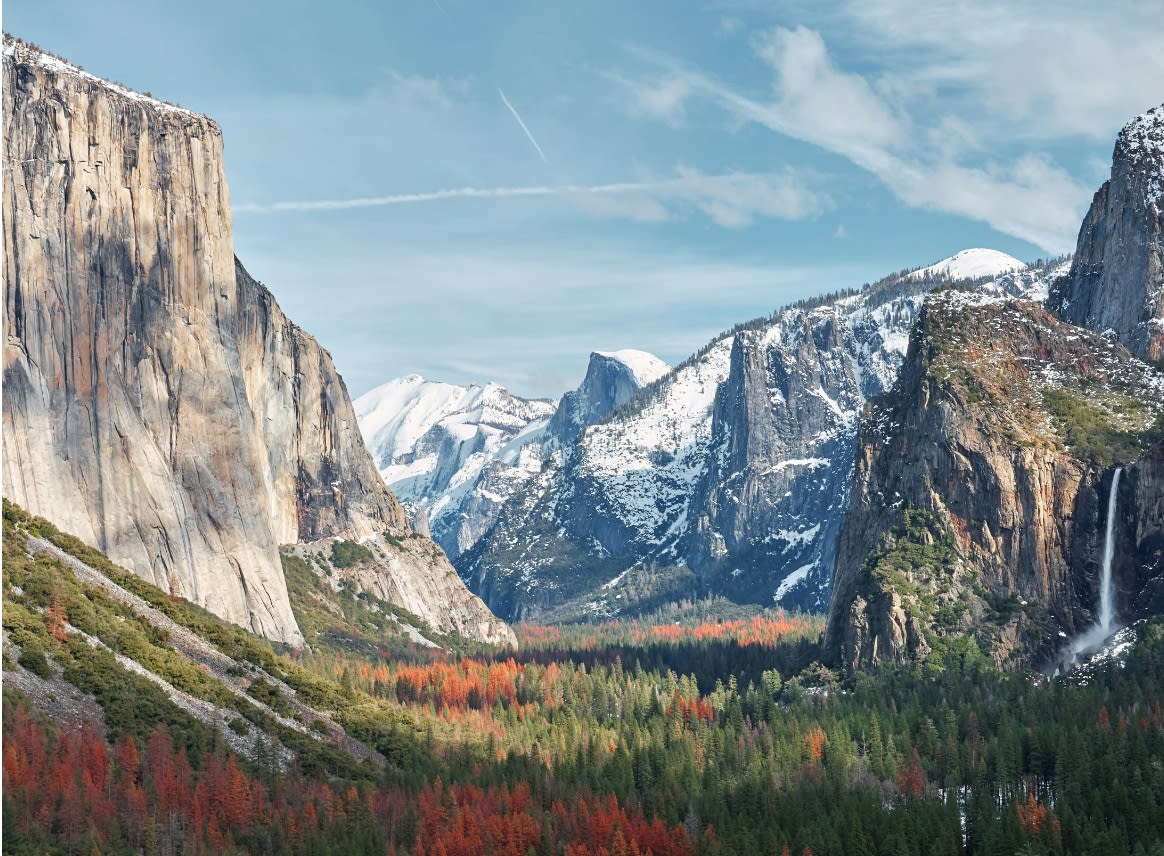
On May 15, 1903, Roosevelt arrived at Yosemite. Muir took Roosevelt into what he called a “temple grander than any human architect could by any possibility build.” No briefings. No policy memos. Just granite cliffs, thundering waterfalls, and groves of ancient sequoias whispering the truth of eternity.
|
On their second night, high above Yosemite Valley, a snowstorm swept in. The president and the naturalist huddled by the fire as five feet of snow blanketed the forest. The cold bit hard, but instead of pushing them apart, it drew them closer.
|
Lesson #2: Hardship can build not just resilience, but reverence.
When weathered together, adversity becomes sacred ground for transformation.
|
Their three days of hiking under the open skies had the effect Muir must have hoped for. “There can be nothing in the world more beautiful than…Yosemite,” Roosevelt would later say. “The groves of the giant sequoias…our people should see to it that they are preserved for their children and their children’s children forever, with their majestic beauty all unmarred.”
|
|
|
|
|
For Muir, this journey was never just about framing policy. It was about fostering presence. He looked past Roosevelt’s title and saw a fellow seeker.
|
“Camping with the president was a remarkable experience,” Muir reflected. “And I fairly fell in love with him.”
|
Instead of trying to win over Roosevelt directly, Muir saw Roosevelt’s core, and loved that core. That love became the alchemy of change.
|
Lesson #3: When you want to change someone, take them to their soul.
Through awe, through friendship, through the sacred act of seeing.
|
|
|
The Legacy Born of a Campfire
|
|
|
After his hike in Yosemite, Roosevelt returned to Washington transformed. According to the National Park Service, “Their conversations and shared joy with the beauty and magnificence of Yosemite led Roosevelt to expand federal protection of Yosemite, and it inspired him to sign into existence five national parks, 18 national monuments, 55 national bird sanctuaries and wildlife refuges, and 150 national forests.”*
|
The American conservation movement was born not in a committee meeting, but beside a fire, beneath the stars, in a snowstorm. No white paper, petition, or protest could have moved the president as much as those three days and nights.
|
Lesson #4: Raise someone’s consciousness, and they’ll raise their own actions.
|
Muir’s impact came not from institutional authority, but from inner clarity. Born in Scotland in 1838, he grew up memorizing scripture and poetry. He built inventions to wake himself at 1 a.m. so he could study before working on the farm. He studied chemistry, geology, botany.
|
When a factory accident left him blind for weeks, he used the darkness to find his direction. “This affliction has driven me to the sweet fields,” he wrote. And so, he walked. Out of the factory, into the forest, and ultimately into history.
|
Instead of protesting or arguing, Muir simply revealed. This is from where he derived his changemaking power.
|
Lesson #5: Be the frequency you wish to awaken in others.
|
Do you want your team to be bold? Be bold.
Do you want your child to feel awe? Show awe.
Do you want your community to rise? Rise.
|
|
|
|
|
We live in a world of noise—debates, divisions, deadlines. But real change does not begin in noise. It begins in stillness. In presence. In reverence.
|
John Muir didn’t merely love nature. He saw divinity in it. To him, Yosemite was more than scenic—it was sacred. “A window opening into heaven,” he called it.
|
So, I invite you to ask yourself:
|
What is the Yosemite you are called to protect?
Who is the Roosevelt you are being asked to awaken?
Could your next breakthrough happen on a walk, in silence, beneath the stars?
|
Perhaps the next revolution—for our planet, our societies, our spirits—will not be debated in parliaments, but born under the stars, in the stillness of truth, through the voice of one awakened soul.
|
|
|
With reverence and resolve,
Hitendra
|
|
|