
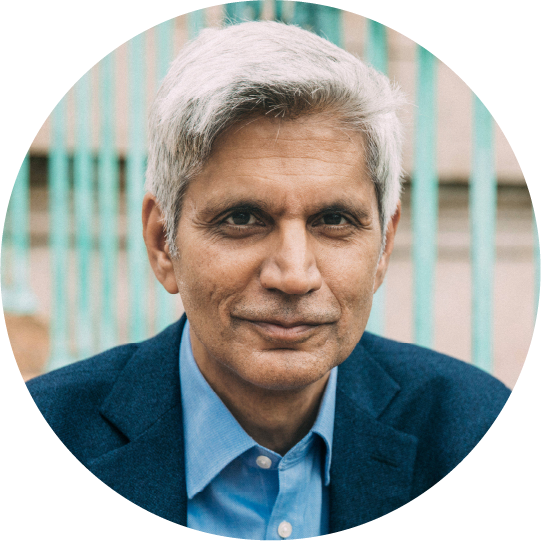
Stanley Davis has been deeply invested in the pursuit of a good education.
Growing up, he remembers a phrase that quietly guided his early years: A good book is a good friend. After-school trips to the library. Long evenings around the dinner table with homework spread out.
“In high school,” Stanley reflected recently to my Mentora colleague, Suan, “my curiosity drove me to take 23 AP (advanced placement) tests. A lot of them weren’t even offered in school, so I would self-study and just take the exams.”
When he arrived at Columbia to begin college, the world widened again. As a freshman, he was already taking graduate seminars and leading research as a lab coordinator in psychology. With his accumulated credits, he is graduating this Spring from Columbia, a year early.
By every familiar measure, this is education done well.
And yet—Stanley has had a deeper stirring.
One afternoon at Columbia, Stanley was taking a class with a famous scientist. “He’s awesome, and I’m a big fan,” Stanley shared. “I’d seen him on TV before, on one of the major late-night shows, when I was a kid!”
A student asked the professor whether he believed in the soul. The professor answered,
“Science is my religion.”
Stanley remembers the moment clearly.
“I’ve just never been that way,” he said. “I don’t think science can give us all the answers. On a heart level, I just know it’s not true.”
Stanley was refusing to let the mind eclipse the whole human being.
“Education,” Stanley says, “especially an overdevelopment of the mind, isn’t in itself good. It’s like having tools. Tools can be used in good ways or bad ways. And if education isn’t grounded in service and empathy, it can actually isolate us—from people who don’t have access to these spaces, and sometimes from our own humanity.”
Then comes the pivot—the aha.
“Education, in its highest sense,” Stanley believes, “is about cultivating the human heart and soul.”
He traces this insight back to a beloved Orthodox Christian priest, Father Michael Oleska, a Native American elder who once said something Stanley has never forgotten: It takes a very long time to become a human being – a fully integrated human being.
Psychology, Stanley notes, says much the same thing. Becoming whole—what Maslow called self-actualization—is not automatic. It requires formation. Reflection. Empathy. A sense that “the world is bigger than the one in which you found yourself, that you were formed in.”
Which brings me to this past summer.
We welcomed Stanley and fourteen of his peers—from eight colleges and universities—into Mentora’s Transformative Leadership Academy (TLA), a two-week, scholarship-based immersion program held at the Scarritt Bennett Center in Nashville.

“I was really taken aback, in a good way, by the TLA application,” Stanley told us. “I had to write more essays for Mentora than I did for my Rhodes application! The questions were deep. Hard-hitting. And answering them actually solidified my desire to be part of the program.”
What struck him most about TLA was the way it helped students till their inner soil.
“The Inner Mastery work—the 5 Core Energies—isn’t something you encounter in most institutions of higher learning,” he observed. “Spirituality just isn’t very present in the classroom. That’s a real gap. And what made TLA powerful was having a community willing to explore these questions together—across faiths, across worldviews, even with no faith at all.”
“Any great seminar,” Stanley reminded us, “needs a shared reference point. In classrooms, it’s a text. At TLA, it was Dr. Wadhwa and Mentora’s work on Inner Mastery, Outer Impact—a common language for reflection that allowed honest dialogue to emerge among participants.”
Beyond TLA, much of Stanley’s inner work happens quietly, each morning.
“After I wake up, say my prayers, and brush my teeth, I sit with my yellow legal pads—fountain pen in hand—for about thirty minutes. Sometimes I get incredible realizations. As Cecil Day-Lewis said, ‘We do not write in order to be understood; we write in order to understand.’
“Sometimes,” Stanley laughs, “I feel like I should charge myself $250 afterward for the psychoanalytic insights.”
Writing, especially poetry, is how Stanley metabolizes life.
“If I have a bad day, I know I’m going to write some good poetry that night,” he says. “Art helps us move through emotion. It reminds us that while each of us is utterly unique, the experiences we’re trying to name are shared across time and culture. Poetry holds both truths at once.”
Behind this luminous path lies the precious mentoring he’s received from Nana, his grandmother and his anchor. A teacher of over 4 decades, Nana received full-tuition scholarships from Vanderbilt for her bachelors and masters, being the first in her family to finish college, and high school.
“She always told me learning was for its own sake. That no matter who you are or where you come from, you can live a life of the mind.”
But even more enduring than curiosity was her emphasis on character. “People don’t care how much you know until they know how much you care,” Nana used to say.
“I still call her every day,” Stanley says. “She continues to shape me. I aspire to love others the way she has loved me.”
Last November, Stanley was awarded the Rhodes Scholarship and will soon begin graduate study at Oxford.
“I’ve come to appreciate the winding, Odyssean road that makes us human,” he reflects. “What does it mean for that journey, like with Odysseus, to be aimed at coming home? To come to God. To come to your own soul. To come to the love that connects us all—even when we don’t fully understand it.”
There will be detours, he says, like in the Odyssey. Calypso’s island. Storms. The mast. The cattle. All of it matters, because all of it makes the story.
“And so, I have to be open—open to the adventure. So many things in my life I could have never anticipated. A year ago, I didn’t even know what a Rhodes was!
“One of my Columbia professors, Dr. Gareth Williams, provided this image: when he died, he hoped he’d be like a car that was totally out of gas. That he had given away everything that he could. To serve, to teach, to love, all these things.
“That’s my hope,” Stanley says quietly. “Because we can’t take any of it with us.”
So each day, he returns to a few simple questions: How do I live like Jesus? How do I love my neighbors well? What am I being asked to carry—and to give?
“The older I get,” says this man who has grown to the ripe age of twenty-one, “the more I see how important it is to just, as we’d say in my church, let the spirit lead you.”
As I reflected on Stanley’s journey, I was reminded of something quietly profound about the very word education.
In Latin, “education” has two roots.
Educare means to train, to mold, to fill. It is about imparting knowledge, skills, techniques—shaping someone from the outside in. Modern institutions do this remarkably well.
Educere, however, means something very different. It means to draw out. To lead forth what already lives within. To help a person discover their deeper nature, their purpose, their latent capacities—and to bring those into the world in service of something larger than the self.
A full education begins with the sharpening of the mind, continues with the awakening of the heart, and finds its fulfillment when the soul is invited to lead.
What kind of future generations might walk this earth if this were the true intent of every parent and every educator?
With gratitude,
Hitendra
“I cannot thank Dr. Wadhwa, Dr. Gilliam and the whole team at Mentora enough for the incredible leadership training I received through TLA. As I enter into a new leadership cohort with this year’s fellow Rhodes scholars, I know I will take with me the formation I received at Mentora last summer.
“Recently I have been thinking a lot about Mentora’s unique storytelling approach to leadership. As I continue to grow as a person, I know I will take this ethos with me in identifying leaders who inspire me and learning from their lives as examples.
“I feel that I have made so many lifelong mentors through the program as well as an amazing cohort of friends. I know I will take those relationships and experiences with me as I take this next step.”
~ Stanley Davis
Like This Newsletter?
Share it with someone who might find it valuable.


Leave a Reply