
One of President Trump’s first executive actions upon being sworn in has been to dismantle the Diversity, Equity, and Inclusion initiative within the federal government. This is yet another blow to a movement that’s been floundering in recent times, with a number of corporations having rolled back their DEI programs in the last few months.
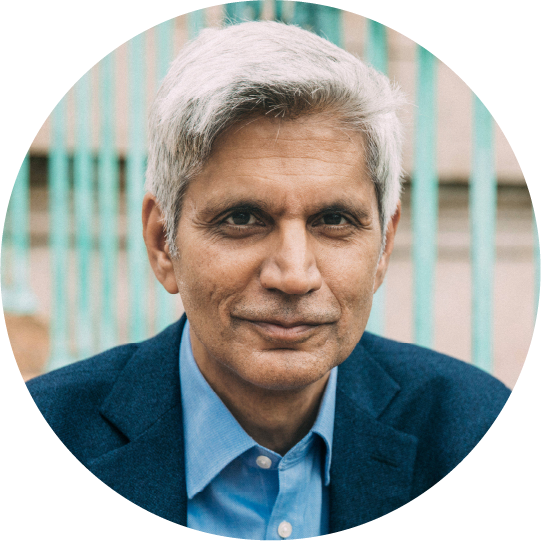
In Fall 2023, I was invited by the Biden Administration to give a speech to the federal government’s Chief Diversity Office Council on the topic, “Can the Diversity Movement Successfully Reboot Itself?”.
Today, I thought I would share this speech with you.
Can the Diversity Movement Successfully Reboot Itself?
Diversity in America has made some remarkable strides in recent decades. When Bill Clinton became President, a majority of Americans disapproved of interracial dating. Today, 90% of Americans approve it. 10% of children born in America today are mixed race. Over the last several decades, the tide has turned in Americans’ perceptions of gender — women today are on the average rated higher on competence and intelligence than men, and women outnumber men in today’s college-educated workforce.Studies show a major shift in a positive direction on LGBTQ rights across US states between 2000-2009, and then again 2010-2020. More recently, George Floyd’s murder became a national reckoning. Many complacent attitudes toward race and racism got instantly changed, and many leaders got deeply committed to reforming their institutions.
And yet, today, it is clear that Diversity, Equity, and Inclusion (DEI) is under siege. The Supreme Court’s ruling against Affirmative Action in universities is challenging the viability of diversity programs in every organization. Chief Diversity Officers are experiencing diminished support from their CEOs and other colleagues. Criticisms and concerns are rising about the movement’s excesses and its lack of successes. And aspects of the movement (like affirmative action and gender identity) lack wide support from Americans today. The surge of enthusiasm witnessed in advancing diversity after George Floyd’s killing has now significantly dampened, and may even be getting replaced by a rising wave of resistance.
DEI’s advancement is at a crossroads. Its leaders have a critical choice to make on the path it takes from here.
One path involves doubling down on the approach that has dominated the headlines. Fighting the fight, seizing every inch you can get, wresting power away from opponents whenever you can to influence laws and policies until they wrest it back and reverse your gains.
This path will further cement our divisions. 86% of Americans today believe Americans are greatly divided about our most important values. It is one thing to have different lifestyles, different passions, and different hobbies. But when we have different values, we become a house divided. And, as Abraham Lincoln once stated at a time of rising tensions in the country, a house divided against itself cannot stand. So this first path takes us toward a very dark future. You will win a battle here, and a battle there, but, as a nation, we will lose the war. This first path is a perilous path.
There is a second path. We will only find it if we first recognize that the path the diversity movement is currently on is a flawed path. Why might this be true?
It is flawed because the positions and policies DEI has sought to advance have often been overly simplistic. Critics of diversity policies point to how not all Blacks in America are descendants of enslaved people, not all whites are privileged, not all people of color see themselves as victims of discrimination, not everyone who is against affirmative action is a racist, and many people are today of mixed race. The movement has simply not developed more nuanced thinking on these issues.
It is also flawed because DEI programs have not sufficiently acknowledged or sought to mitigate their downside. What should we do when a diversity goal meant to advance one minority group interests ends up unfairly penalizing another, such as universities’ affirmative actions programs’ impact on Asian-Americans? How does an institution that pushes zestfully to fill certain positions with minorities to meet numerical diversity targets ensure that it is not elevating people who are inadequately qualified or ill-prepared to succeed in those positions and ensure that some minimum standard of meritocracy is preserved? The movement has not given space for answers to emerge on such questions.
And finally, it is flawed because diversity training on themes like unconscious bias and microaggressions may have been designed to mandate conduct, but it was not designed to win people’s hearts. Science has known that instructing people, “You’re bad; I’ll tell you how to be good” reinforces, rather than corrects, people’s unconscious tendencies to act in the way you don’t want them to.
The second path invites us to recognize that we do not at present have in our hands a clear winning solution for advancing diversity. We do not even have agreement on what diversity should truly mean or how we should frame it.
The path to a more perfect world needs to be co-discovered and co-evolved. And to get there, the movement needs to take three critical steps.
The first step toward rejuvenating the diversity movement is to approach it from a place of deep love. Deep love for America and for our fellow Americans.
Our founders established a noble aspiration of a just and equal society. They did not claim that this goal was achieved upon the signing of the Constitution; rather, this was an ideal to be approximated and approached over time as society’s values evolved. Our role is to honor their aspiration, to celebrate the steps past generations have taken to advance it, and to do our part to come even closer to the ideal point. The diversity mission is a critical link in the unbroken chain of progress that’s been and will continue to be forged across generations, past, present, and future, in a nation that is a work in progress. The America we are all being invited to love is the America that, despite its historic and present-day flaws, aspires to be a just and equal society in which everyone has the right to rise.
To love America, we need to love the American people. Not just those who agree with us, but all Americans. We will get there when we start to see each other through the lens of a shared identity, instead of our group identities. This shared identity comes from the ideals we embrace of a just and equal society. Because a predominant majority of Americans are fully behind the ideals of equality, liberty, and progress. We know that from a recent survey by Siena College Research Institute, a respected polling body. 80% of Americans, across the political spectrum, are fully behind these three values — equality, liberty, and progress. We are one nation.
Our shared identity also comes from the bright spots we find in our history, moments where American virtue has come shining through. These moments reveal the highest potential that resides within each of us, our true nature. When we approach all individuals in America through this lens, we do not have to put any special effort to love them because we then are simply in love with them — in love with the heroic potential that resides within them.
Daryl Davis is a Black musician who has befriended over 200 Klu Klux Klan members and convinced them, many through one-on-one conversations, to disavow their beliefs in white supremacy and walk away from the KKK. Antoinette Tuff was a bookkeeper at a school in Atlanta ten years ago when a young man called Michael Hill entered the school with an AK47 and thousands of rounds of ammunition, intent on committing a mass shooting. With great love for Michael and an intrepid spirit, Antoinette induced him to abandon his plan, lay down his gun, and surrender peacefully to the police. “I want you to know that I love you, OK…and I am proud of you,” were among the words she shared with him that day.
Most of us do not know about Antoinette, and yet we all know about the Columbine shootings. This is what limits us today. So little of our attention goes to the bright spots in our world — the spots that show us what humanity is truly capable of, what each of us is truly capable of. There is greatness in convincing a white supremacist to give up his beliefs, and to convince a would-be mass shooter to lay down his weapon. And there is greatness in a white supremacist who gives up his beliefs, and in a would-be mass shooter who lays down his weapon, both peacefully and of their own choosing.
When diversity proponents deal with their opponents from a place of love, they increase the chance that their opponents will engage with them, and once they engage, then, over time, change does come.
The second step on this new path is to approach the diversity work from a place of great humility.
The policy prescriptions that will get us to a more utopian society aren’t perfectly clear. Executives need to engage in co-discovery and co-creation with a diversity of people and groups to look for solutions to build a just and equal society.
The only way they will achieve their goals there is if they work on changing people’s character, not simply their conduct. People have to feel respect for each other, not just superficially show respect because that’s what’s mandated of them. If change is only skin deep — requiring certain words and actions of people, rather than inspiring certain new beliefs and feelings in them — people will revert to their old ways as soon as no one is looking, or when the winds of popular opinion shift in another direction, like they are doing now. But people do not change their character by simply being told to follow a set of rigid prescriptions — use these phrases, not those phrases; share your pronouns; make sure your C-suite has this minority group and that minority group represented in it. People change their character when they see us as their friend and get inspired by us to open their hearts and see the world differently.
Vinoba Bhave created that breakthrough in India in 1950, when he, despite being a well-respected social reformer, was struggling to win the support of wealthy landowners to engage in land redistribution. India had recently gained independence from Britain, and there were high levels of rural poverty and social inequality — a few wealthy landowners, and lots of landless farmers. Vinoba appealed to the landowners to give some of their land to the landless farmers, to help improve their living conditions. But landowners resisted.
Through dialogue and inquiry, Vinoba realized that it wasn’t that the landowners were not caring or generous — they were simply stuck in a deeply-held social norm that made fathers pass on all their land holdings to their sons. To them, giving land away would be an uncaring and unkind act in relation to their own family obligations. So how might you open the heart of a landowner to care for those beyond his own family?
Vinoba devised a plan. He walked from village to village in India, meeting the wealthy landowners. In every such conversation, he would share with them the critical need to offer the landless farmers some land of their own. Then he would ask the landowner how many sons he had. To a landowner who had five sons, he would say, “Take me as your sixth son.” This was, for the landowner, an unexpected honor — to claim Vinoba to be his own son! Then he would ask, “And as your son, I ask you to give me my fair share, one-sixth of your land.” He was meeting the landowners where they were, honoring their wish to keep the land within their family, and yet also inspiring them to make a contribution to the land redistribution movement he’d started. It worked — over 4 million acres of land transferred ownership from the landowners to him, and from him to the landless farmers.
Character change is also what enabled Nobel Laureate Leymah Gbowee to forge peace between the Christians and Muslims in war-torn Liberia. Sickened by the senseless loss of life and limb, she galvanized a group of Christian and Muslim women to come together and apply great pressure on both sides, eventually compelling war leaders to negotiate a settlement. These women too could have been bitter and inimical with each other, since they were on opposite sides of the war. Leymah was able to create a breakthrough by inviting both Muslim and Christian women to come together in a shared space to pray and sing. This simple act of prayer and song helped the women forge a strong empathetic bond, and the rest is history.
Vinoba and Leymah recognized that they needed to find a way to win people’s hearts and minds. They created a safe and welcoming space for diverse opinions to bubble up, and then the breakthroughs came. The diversity moment needs to create such spaces. Where they go not simply to lobby, but to listen and learn. Where they experiment with new ideas. That is the only way they will get the breakthroughs needed to advance people’s character.
And finally, the third step is to look beyond. Beyond oneself, beyond today, and beyond one’s need for control.
Deep down, when we look at the limitations the diversity work has faced, we find that many in this work have at times been feeding the wrong wolf. The silent calculus of what actions will most advance my career path and protect my interests. The grudging feeling that it’s high time my people wielded and asserted some power. The limiting belief that I will naturally have the greatest motivation for advancing the interests of my group as you must have for your group. This cannot lead us to collective success.
Great missions are fueled by a deep form of cohesion and selflessness, an openness to sacrificing one’s own material outcomes in service of the collective cause. This happens, for instance, when we honor the goodness in those we oppose, because there is goodness in them. When we acknowledge and address the weakness in our own group. When we are open to challenging the direction taken by our own friends and collaborators when we feel they aren’t on the right path, at the risk of being sidelined and isolated, because truth is more important to us than the companionship of others. When we materially give up some of our privileges — not of other people in our group, but our own — to help open up opportunities for others. We have not seen enough of this sacrificing spirit across the ranks of the diversity work. It comes down to one thing — are you maneuvering to maximize the gains for you and your group, or are you so much in love with the American ideal of building a great society that you are willing to make any personal sacrifice necessary to get our people to the promised land?
We also have to look beyond today, because great missions take time to manifest. In the 1800’s, women had very few rights. They weren’t allowed to own property, enter into contracts or keep their own wages. Susan Anthony was among a group of pioneering women’s rights activists who realized that the pivotal change that would start to reform society would be for women to have the right to vote. She dedicated herself to this cause when she was in her early 30’s, and stayed with it all through her life, till her death at the age of 86. A year before her passing, she acknowledged in a speech that many would feel that her life had been a defeat, since women still did not have the right to vote. Yet her own assessment of the situation was this: “Defeats? There have been none in my life and work. All our defeats have been glorious victories, in that the cause of woman has never been presented to the voters of the country without winning very many of them. We never lose. We are always progressing.” She had no doubt that one day, this set of converted people would become the majority. 14 years after her passing, Congress passed the 19th amendment to the Constitution, the Susan B Anthony amendment, enshrining women’s right to vote. Diversity proponents too have to take on the hard, patient work of meeting people where they are, holding their hand, and taking them, step by step, on a journey. By winning America over a few hearts at a time, they will be building a foundation that will serve our nation well in the decades to come — a foundation of empathy, understanding, and kinship.
And finally, diversity leaders need to go beyond their need to control — to control the steps, the planning, the timing, the outcome. Every social mission has an agenda it wishes to advance, an audience it wishes to target, and the arc of the change journey it wishes to take. Here is a law of social transformation. No mission can control the audience, the agenda, and the arc all at the same time. If you have a certain audience — in this case, the American people, and if you have a certain agenda, in this case the goal of fostering a just and equal society, then you will not be able to control the arc of your change journey. Twists and turns will arise unexpectedly, the pace of change will accelerate at times and slow down at other times, and new champions and opponents will show up along the way.
This happened to Mahatma Gandhi in 1920. He was all set to unleash a national civil disobedience movement in India to fight against British imperial rule. But just as he was getting it off the ground, there was a flare up in the town of Chauri Chaura. Protestors clashed with police, who opened fire on them. In their outrage against the police action, protestors converged on the police station and burned it, killing a number of policemen. This was not what Gandhi had planned for. Despite emotional protests by other leaders of India’s freedom struggle, Gandhi decided to call off the plans. It was ten years later that he re-started the national struggle.
A changemaker constantly needs to assess when to push, when to pull back, when to pause, and when to pivot. This requires you to cultivate a fine-tuned understanding of your context and how it is unfolding, and to practice total surrender — a surrender of your attachment to a particular outcome for a particular audience in a particular timeframe. You will simply never be able to control it all.
To accomplish all that the diversity movement wishes to, it needs all the help it can get. We need to form a Coalition of the Committed. Committed not in getting our point of view to win, or of pitting one group against another, or maximizing what we can get for “our” own people. But committed to building a united, strong America, arriving at just and lasting solutions, and being in it for the long haul.
Such a Coalition will need to be committed to one more thing — to its own growth. Because the impact the diversity movement can have is limited by the capacity of its own leaders and followers — the capacity to inspire, to resolve conflicts, to use setbacks to become better, not bitter, to challenge their own limiting beliefs, and to win people’s hearts and minds.
One changemaker who went through such growth is Nelson Mandela. The Mandela who got convicted and sentenced to life imprisonment for fighting the Apartheid system was not the same Mandela who got released 27 years later to continue and eventually win that fight.
Gandhi built India’s nonviolent independence movement on a struggle-truce-struggle model — one year of struggle, followed by eight or nine years of truce, and then another one year of struggle. He used the periods of truce to getting his people to rest and rejuvenate, and to engage in social reforms on issues such as women’s rights, education, religious harmony, and the caste system. He was using these periods to guide Indians on strengthening their own character, so they may be better prepared to take on the mantle of self-governance when independence came their way. Some Indians wanted to push for faster progress by using violence against British rule. Gandhi resisted, telling them, “If we use guns against the British, who do you think we will point the guns toward once the British leave?”
Gandhi’s work took 27 years to ultimately bear fruit, in having Britain peacefully surrender power in India. In Nelson Mandela’s case, he had to spend the same number of years — 27 — in prison, under the Apartheid government. He could not use that time to bring reform to his people, so he instead used it to reform himself and build a deeper empathetic understanding of Afrikaners and their history. The co-author for Mandela’s autobiography, Richard Stengel, has noted, “The man who walked onto Robben Island in 1964 was emotional, headstrong, easily stung. The man who emerged was balanced and disciplined.” Mandela himself said, “I came out mature.” This calmness and capacity for reconciliation Mandela cultivated in prison proved critical later to his success in winning over his opponents and the broader South African public, avoiding a civil war, leaving behind a painful past, and birthing a democracy.
The Coalition of the Committed should aim to pursue a second American revolution. An inner revolution. A revolution that uses the power of love, humility, and looking beyond to bring about inner reform in America, an elevation of our consciousness that ushers a just and equal world. What is at stake here is not simply the future of our nation, though that is a worthy enough cause. It is the future of humanity. Because the world has lost its north star. So many around the world have looked up at America in the past, for inspiring their own change and growth. But today, America’s standing on the world stage is greatly tarnished. A recent Pew survey of international respondents from 16 democratic societies found that just 17 percent said democracy in the U.S. is a good example to follow, while 57 percent think it used to be a good example but has not been in recent years. This also means that humanity is feeling a bit rudderless. By reforming ourselves, we might just inspire the world to reform billions.
My goal that day was to speak candidly to the Biden Administration Chief Diversity Officers — lovingly and candidly — and to open Council members up to a whole new way to build a more perfect world — the way of Gandhi, MLK, and Mother Teresa. I appreciated the warmth and openness with which they received this message. I did not have any meaningful interaction with them after that event to know whether these ideas made any difference over the last year.
Perhaps in these reformatory ideas lie some seeds that you and I can plant in our own consciousness to guide us in moments where we are on fire to advance a righteous cause in the world.
Warmly,
Hitendra
Like This Newsletter?
Share it with someone who might find it valuable.


Leave a Reply